
CENTRE DIRECTOR
The Southern Highlands Wildlife Research Centre (SHWRC) was established in 2024 under the Tanzania Wildlife Research Institute (TAWIRI) to coordinate and strengthen wildlife research in the Southern Highlands of Tanzania. The Centre’s creation was driven by the need to address the region’s unique ecological challenges and to enhance scientific knowledge for sustainable conservation and management of its rich biodiversity. The headquarters of SHWRC is located at Kihesa Kilolo in Iringa Region, strategically positioned to serve as a hub for wildlife research, monitoring, and conservation initiatives across the Southern Highlands. This region is ecologically diverse, encompassing montane and miombo ecosystems, wetlands, and wildlife corridors that are critical for species survival and human–nature coexistence. In addition to research coordination, the Centre is entrusted with the management of captive breeding and conservation facilities for the Kihansi Spray Toad (Nectophrynoides asperginis)—an amphibian species once declared extinct in the wild. SHWRC oversees the facilities at the Kihansi Wildlife Station in the Morogoro Region and the captive facility at the University of Dar es Salaam, ensuring continued conservation and reintroduction efforts for this globally significant species. Through its mandate, SHWRC provides a scientific base for conservation policy and management decisions in the Southern Highlands. The Centre is envisioned to grow into a regional leader in applied ecological research, ecosystem restoration, and community-based conservation, thereby advancing TAWIRI’s mission of safeguarding Tanzania’s wildlife heritage.
P.O. BOX 1596 Iringa-Tanzania
Tel: +255 767 305 968,
E-mail: shwrc@tawiri.or.tz
The Southern Highlands Wildlife Research Centre (SHWRC) provides a range of services that support wildlife conservation, capacity building, and evidence-based decision-making.
The Southern Highlands Wildlife Research Centre (SHWRC), operating under the Tanzania Wildlife Research Institute (TAWIRI), under the Ministry of Natural Resources and Tourism (MNRT), implements an adaptive conservation program for the Kihansi Spray Toad (Nectophrynoides asperginis). The species experienced a rapid population collapse and was declared extinct in the wild in 2009 following major alterations to its spray-wetland habitat associated with hydropower development in the Kihansi Gorge. Emergency captive rescue efforts prevented total extinction and laid the foundation for long-term recovery.
The program seeks to enable sustainable conservation of the Kihansi spray toad by strengthening captive breeding systems, restoring natural habitats, and conducting rigorous scientific monitoring, thereby reducing extinction risk and contributing directly to the implementation of Tanzania’s National Vision 2050 through biodiversity conservation and ultimately the promotion of sustainable tourism. SHWRC currently maintains a biosecure captive assurance population of approximately 5,000 individuals, housed across two specialized laboratories at Kihansi Wildlife Research Station and the University of Dar es Salaam.
Building on earlier reintroduction efforts conducted between 2011 and 2022, which did not result in sustained wild establishment, SHWRC is implementing experimental, science-guided reintroduction trials to foster adaptive survival under natural conditions. To date, 700 individuals have been reintroduced into the restored Upper Kihansi wetlands, and 100 individuals into the newly surveyed Lululutonya wetland along the Kihansi River, with long-term ecological monitoring ongoing to assess survival, reproduction, and habitat performance.
The program also benefits from collaboration with international institutions from the United States, including the Bronx Zoo and the Toledo Zoo, which are supporting genetic studies of KST populations to inform captive management, population structure, and long-term conservation planning. Key challenges include maintaining stable microclimatic conditions, managing disease risks, and the high costs of specialized infrastructure. In response, TAWIRI is piloting locally adapted innovations, including locally fabricated mist-spray systems and cost-efficient facility components, to enhance sustainability, national self-reliance, and long-term program viability.
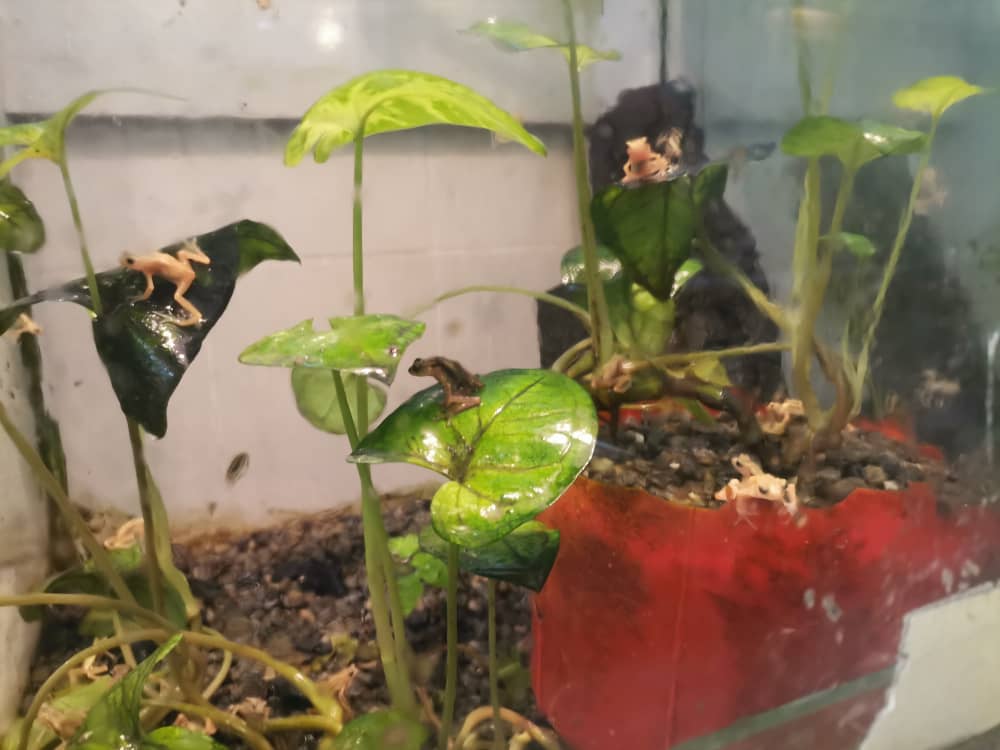
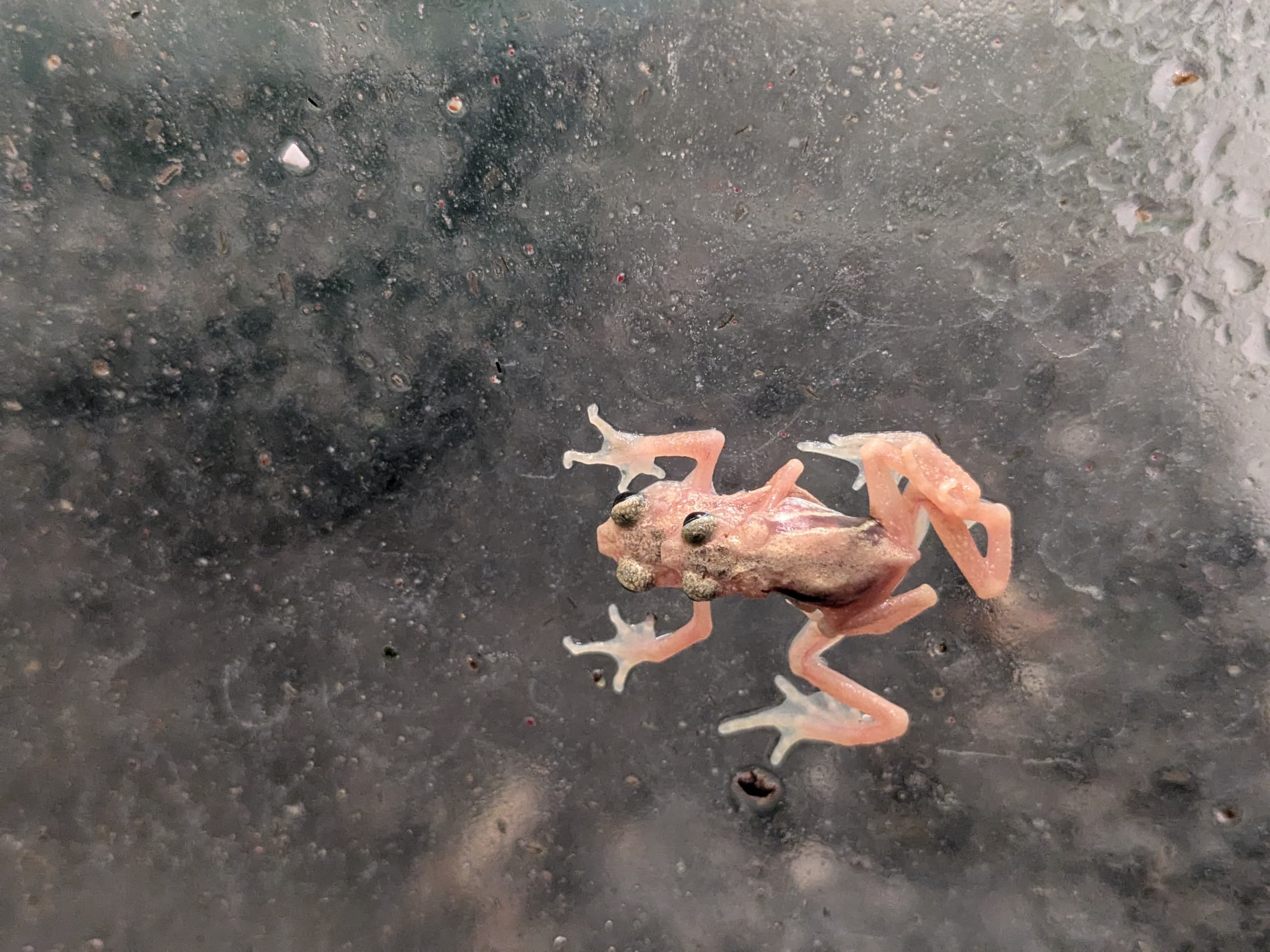
Captive Kihansi Spray Toads housed in a biosecure enclosure, demonstrating natural perching behavior on live vegetation as part of ex situ conservation and population recovery efforts.