
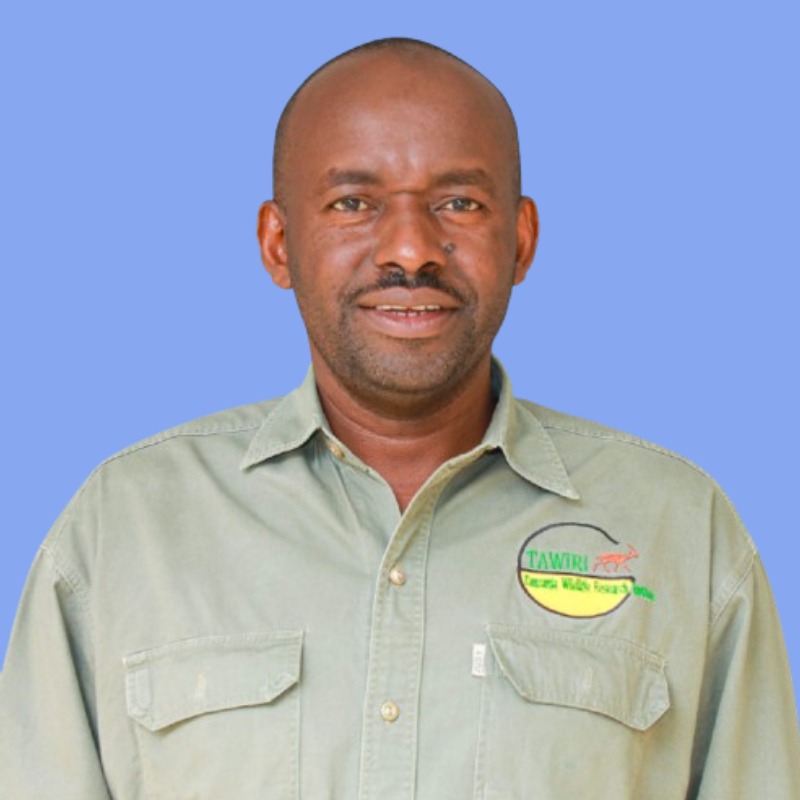
CENTRE DIRECTOR
The Serengeti Wildlife Research Centre (SWRC) is the genesis of all wildlife research in Tanzania, since it is at this centre where first research work was initiated by the Germany scientist Prof. Bernhard Grizmek 50 years ago. In fact, SWRC was originally the headquarter of Serengeti Research Institute (SRI) before the establishment of Serengeti Wildlife Research Institute (SWRI) by the parliament Act no. 4 of 1980 and the name was changed to Tanzania Wildlife Research Institute (TAWIRI) by the parliament Act no. 10 of 1999. SWRC continues to be the centre of excellence in wildlife research since it is here where most of the wildlife researchers are based. SWRC is responsible for wildlife research carried out in the Serengeti National Park and surrounding protected areas including Ngorongoro Conservation Area (NCA), Ikorongo-Grumeti Game Reserves (IGGR), Maswa Game Reserve (MGR) Lake Manyara National Park (LMNP), Tarangire National Park (TNP), Loliondo Game Controlled Area (LGCA) and Lake Natron Game Controlled Area (LNGCA), Burigi –Chato National Park, Saanane Island National Park, Rubondo Island National Park, Rumanyika-Karagwe National Park and Ibanda-Kyerwa National Park.
The SWRC is found in the Serengeti National Park (SNP) which is about 327km from Arusha town, 95km from Mugumu town, 150km from Lamadi town and 60km from Fort Ikoma. The Serengeti National Park lies in northern Tanzania at an altitude ranging from 910 – 1820m a.s.l. and the park has an area of about 14 763sq.km (1o28′ – 3o17′ S; 33o05′-35o20′ E). It is one of the largest wildlife sanctuaries in the world and was accepted by the World Heritage Convention as a World Heritage Site and Biosphere Reserve in 1981. Flight from Arusha to SNP is about one hour. The Centre has one research station (Endala) which is in Lake Manyara National Park and is located about 17km from the main entrance gate.
Address: Seronera, Serengeti National Park.
Geographic Context: Located in the central Serengeti, providing immediate access to the diverse plains, woodlands, and riverine habitats that support the largest concentration of plains game in Africa.
Tel: +255 (0) 732985740,
E-mail: swrc@tawiri.or.tz
TAWIRI through SWRC affiliate with various education institutions such as Sokoine University of Agriculture (SUA), University of Dar es salaam (UDSM) and University of Dodoma (UDOM) to plan, coordinate and supervise field activities for the students in Wildlife Management, Biology, Laboratory science and Veterinary Medicines during their practical training sessions. Prior to field practical training lectures provided to the student based on their disciplines to raise awareness on activities they are going to do.
The centre provided various scientific talks to tourists and visitors who visit the Serengeti Ecosystem. The lectures aiming at conveying the results of various past and ongoing research projects carried out at SWRC based on the client requirements.







P.o Box 661 Arusha. 206 Njiro Road, 2113 Lemara, Arusha, Tanzania
+255 734 094646
barua@tawiri.or.tz | dg@tawiri.or.tz


 Users Last 7 days : 412
 Users This Month : 279
 Total Users : 68938