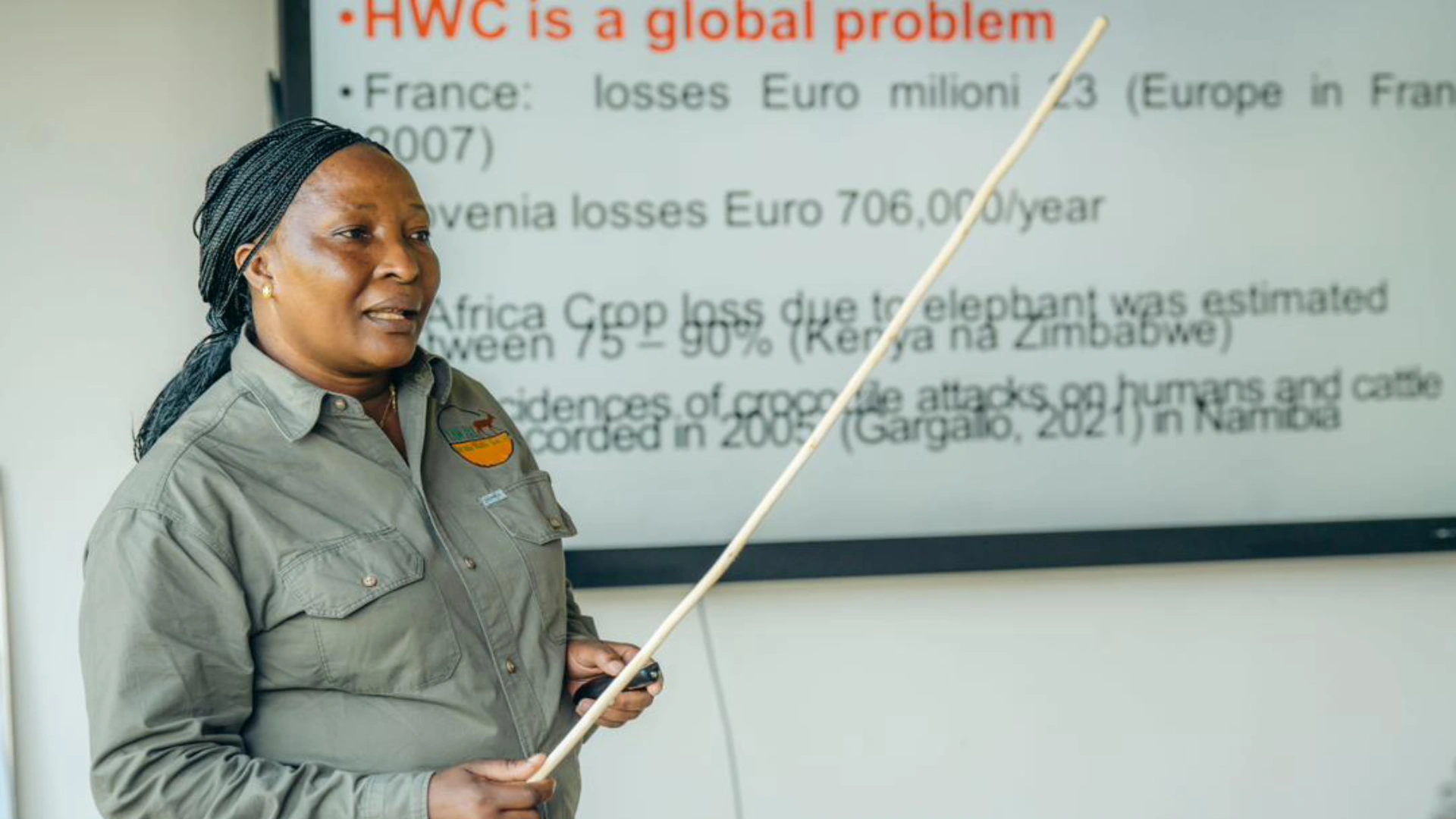
As the world prepares to celebrate International Women’s Day on March 8, 2026, the contribution of women in science and conservation continues to gain global recognition. Among them is Dr. Janemary Ntalwila, a senior researcher at the Tanzania Wildlife Research Institute (TAWIRI) and a leading expert in addressing human–wildlife conflict.
Dr. Ntalwila’s research focuses on developing practical, science-based solutions that enable coexistence between communities and wildlife, including species such as elephants, crocodiles, hippos, and lions, which often come into conflict with people living near wildlife habitats.
According to Dr. Ntalwila, scientific research plays a critical role in guiding sustainable coexistence strategies, helping communities reduce risks while protecting wildlife populations.
One of the most impactful initiatives implemented through TAWIRI and the Ministry of Natural Resources and Tourism involves the construction of special protective enclosures designed to minimize attacks from crocodiles and hippos in communities living near rivers and lakes.
These enclosures have significantly improved safety for residents who rely on water bodies for daily activities such as fishing, water collection, and transportation.
So far, the Government of Tanzania has supported the construction of more than 50 protective enclosures in highly affected areas including Lake Victoria, Lake Tanganyika, Lake Nyasa, and major rivers such as Ruvu, Pangani, Kilombero, Ugalla, and Ruvuma.
In addition to infrastructure development, the program also includes community education and awareness initiatives to ensure residents understand how to use and maintain these protective structures effectively.
Dr. Ntalwila’s work demonstrates how science, conservation, and community engagement can work together to promote both human safety and wildlife protection, reinforcing Tanzania’s commitment to sustainable conservation.
Her leadership highlights the growing influence of women in conservation science, inspiring the next generation of researchers working to protect biodiversity while supporting community livelihoods.